Community Spotlight: Denise Nadeau

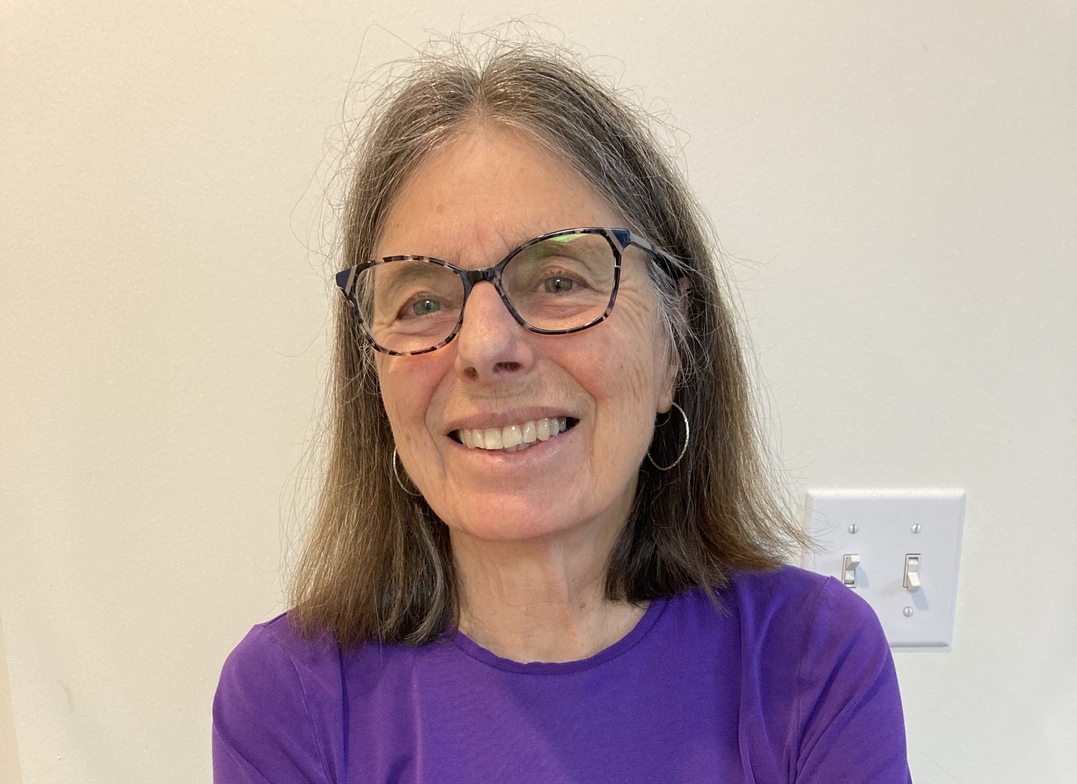
This week our community spotlight falls on Denise Nadeau, a seasoned academic, passionate advocate for justice, and a treasured member of our community. Denise has been an important presence in the life of our community, and always has an eye for justice and reconciliation in our community discussions. We are greateful not only for her commitment to AbbeyChurch, but also for her willingness to open up to the community about her personal story. Thank you Denise!
Tell us a bit about yourself
I’m from Quebec, of mixed European heritage, French mixed with Scottish, Irish and English, and I grew up in Montreal. Both my ancestral families have been there for several generations - My Dad’s family settled in Mi’gmaq territory, my Mom’s in Kanyen'kehá : ka ( Mohawk). This settler history has affected how I see the world. I came to Victoria 8 years ago after many years moving between the Comox Valley , Vancouver and Montreal. I am a writer, educator, movement therapist, mother and grandmother.
How did you find yourself at Abbey Church?
Someone told me about Abbey when I first arrived in Victoria, but it took me awhile to get here. I hung around the Toronto and Tacoma Catholic Worker communities in the late 90’s and early 2000’s at about the same time Rob Shearer was there. I was walking by Abbey one afternoon, feeling disconnected from church organizations that were urging neutrality during recent world conflicts. I decided to walk up the rainbow stairs and there was Rob preparing for a liturgy and I saw a Black Lives Matter sign and a red dress and my body relaxed. This felt like home.
What continues to draw you to Abbey?
What continues to draw me to Abbey are the sermons and the music. I am a sermon geek and I like guitar and the variety of music. I picked up a tone of non-judgment – you can be who you are here and be accepted. And I like the open communion table. It speaks volumes for me. I like that Abbey supports QomQem.
Tell us a bit about your faith journey.
I grew up Catholic in Montreal and went to a convent for high school. I felt called to religious life but being a nun didn’t look like fun and priest hood was not an option. I stopped going to church at 17 but I had a personal crisis when I was 33, a custody case where being a lesbian meant losing your children. I turned to a Catholic base community for spiritual consolation. The next year I attended the World Council of Churches gathering in Vancouver and the rest is history. I did a degree at Vancouver Schol of Theology and later went to San Francisco Theological Seminary for a program in International Feminist Theology. During this period and later I worked as a popular educator, trained as a dance/movement therapist, became a religious educator and eventually ended up teaching in the Religious Studies Department at Concordia University in Montreal. In the last decade I have been drawn to Zen Buddhism and am a member of Middle Way Zen sangha here in Victoria.
How do you fill your time? What brings you joy?
I get immense joy being with my two grandchildren whom I look after twice a week. I am part of a community garden with my partner, Elisa. I do beadwork and read. And I love walking in the woods, and I dance. I have a regular Buddhist meditation practice and am part of two prayer groups, a writer’s group and a dance therapy group. I write creative non-fiction. And I am activist. Too busy.
What is a cause or concern that moves you deeply, or that you are passionate about?
I am passionate about supporting Indigenous rights and protecting our lands and waters through Indigenous law. I am on the steering committee of RIPL, Reconciling with Indigenous Peoples and the Land, that grew out of James Bay United. I am involved in protecting SELEK̵TEL̵ Goldstream River and support actions for a just peace for Palestine.
Where do you sense God is at work today - in yourself, in our community, in the world?
In the astounding beauty of raindrops glistening in the sunlight on a fir tree branch, in the work of so many people who help others in need both near and far, in resistance movements everywhere. In collective silence in prayer.

-
Weekly Worship Sundays at 4pm + weekday prayer